Noob Battle: War Sandbox
- 0.0
- Rating
- 50.00K
- Installs
- Free
- Price
 Analysis by App-foxy
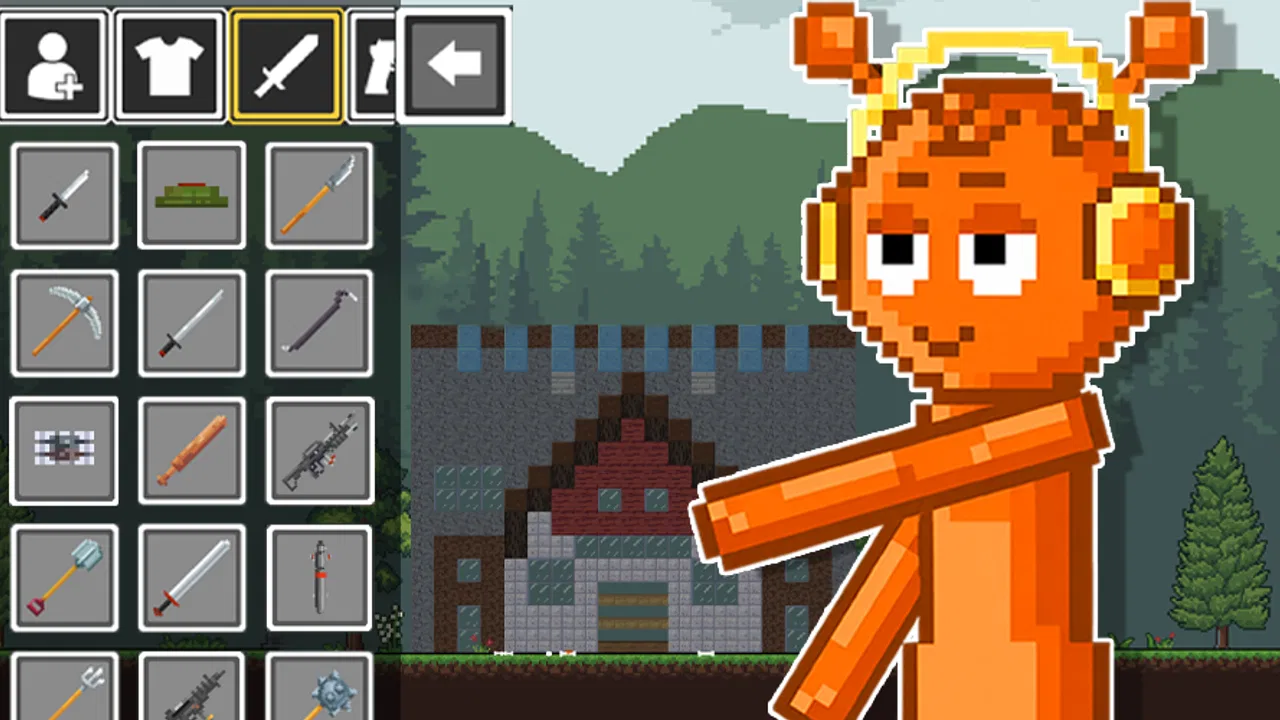
I went into Noob Battle: War Sandbox expecting a light simulation game built around quick experiments, and that is exactly where it makes its best impression. Its appeal is not a long campaign or a carefully scripted military story. Instead, it puts the fun in arranging battles, watching simple characters collide, and changing the setup when the result looks ridiculous, surprising, or simply more entertaining than the last attempt.
That focus gives the game an easy starting point. I do not need to learn a complicated rulebook before trying something. The noob-style presentation makes the battlefield feel playful rather than serious, while the ragdoll behavior adds an unpredictable layer to every encounter. A plan can look sensible one moment and turn into a chaotic pileup the next. For me, that contrast is the central reason to keep experimenting.
Q8Power presents this as a free simulation game for Everyone, and the tone supports that broad audience. It is suitable for players who enjoy sandbox toys, humorous physics, and short sessions rather than demanding strategy campaigns. It reached Android on August 5, 2026, and the current version is 2.1.2, with support beginning at Android 7.0. The game has passed 50 thousand installs, which suggests a modest but real audience for its particular kind of battle playground.
You May Also Like

 AccuWeather: Weather Radar
AccuWeather Review: A Quick, Clear Forecast for Everyday Decisions
For everyday plans, the best forecast is the one you can understand quickly. AccuWeather makes rain timing, radar, and local conditions easy to act on, with a few trade-offs.

 Hill Climb Racing
Why Hill Climb Racing Still Turns Crashes Into One More Run
A tiny car, a bumpy hill and one more upgrade: Hill Climb Racing keeps resurfacing because its simple chaos makes every near-miss feel personal.

 AliExpress - Shopping App
AliExpress Makes Global Shopping Feel Personal, but Shoppers Bear the Risk
AliExpress turns a global marketplace into a pocket-sized discovery engine. Its reach is useful, its shopping loop compelling, and its trade-offs easy to miss.

 Lords Mobile: Kingdom Wars
Lords Mobile Is a Kingdom-Building Routine, Not a Quick Match
A case-by-case verdict on the building, battles, device demands, and social commitments that make Lords Mobile rewarding for some players and exhausting for others.

 PDF Scanner app - TapScanner
TapScanner Makes Paperwork Easier to Capture, Check, and Share
TapScanner makes scanning with a phone feel less like a rescue operation and more like a dependable step in getting work done. Its capture tools are useful, though not flawless.

 Block Blast!
 Shows How Much a Puzzle Game Can Leave Out
A quiet grid game shows why puzzle players increasingly value instant clarity, repeatable skill and low-pressure play—and where the genre still needs to catch up.
More From Our News Desk
View All News


How the battlefield communicates its personality
I find that the battlefield’s playful personality is clearest when I pay attention to how a setup changes the action, not just who comes out ahead. That makes the next section less about judging each clash as a win or loss and more about noticing how the game’s look and movement shape the experience. For players deciding whether this kind of simulation suits them, that distinction is useful: the appeal lies in watching the scene unfold.
A first impression built on movement instead of spectacle
The strongest early impression comes from seeing the battlefield behave. In a conventional war game, I usually look for detailed units, a serious setting, or a clear chain of objectives. Here, the visual language points somewhere else. The noob characters and loose physical reactions make the scene readable at a glance, but they also tell me not to treat every clash as a solemn tactical exercise.
That choice matters because it keeps the game approachable. A player can understand the basic idea without needing military knowledge. The setting functions more like a toy box than a historical battlefield, so I am encouraged to test unusual arrangements instead of searching for one correct solution. When a unit falls awkwardly or a formation breaks apart, the result feels like part of the entertainment rather than a failure of presentation.
I also found that the simple style helps the action remain visually understandable. With ragdoll movement, too much visual detail could make collisions difficult to follow. The stripped-back character design gives the motion room to speak. I can focus on where bodies are moving, which side is gaining space, and how a small change in setup affects the next clash.
There is a trade-off here. Anyone looking for a richly illustrated war setting may find the presentation too playful. This is not the right choice if the main attraction for you is realistic uniforms, dramatic historical context, or a cinematic campaign. Its art direction deliberately removes that weight. The reward is clarity and humor, but the cost is a world with less emotional seriousness.
Why the sandbox setting works better than a fixed story
The sandbox structure gives the setting its flexibility. Since the point is to build battles rather than follow a predetermined narrative, the battlefield becomes a place for questions: What happens if I change the balance? Does a different arrangement create a cleaner victory or a more chaotic one? Can I make a scenario that looks entertaining even when the result is not efficient?
That makes the game particularly useful for short bursts of play. I can open it when I have a few minutes, create a small battle, observe the result, and stop without feeling that I have abandoned a mission halfway through. The same structure also makes it comfortable for sharing the device with someone else. One person can suggest a setup, another can adjust it, and both can watch the outcome together.
My practical advice is to treat each battle as a small experiment rather than a test of skill. Start with a simple arrangement and change only one element at a time. That makes it easier to understand why a result changed. If I alter everything at once, the next battle may be funny, but I learn less from it. The game becomes more satisfying when I use its sandbox as a controlled playground before turning it into complete chaos.
Sound and rhythm shape the mood
The game’s mood depends heavily on the relationship between visual motion and pacing. A ragdoll battle is most enjoyable when events have enough room to unfold. If everything happened instantly, the physical comedy would lose much of its impact. The pauses between setup, movement, contact, and aftermath give me time to read what happened and decide whether I want to repeat the scenario with a small adjustment.
That rhythm also separates it from faster arcade games. In an action title, I may be reacting continuously to attacks and controls. Here, the pleasure comes from anticipation and observation. I prepare a situation, let the simulation reveal its consequences, and then judge the result. The slower, more observational flow suits the playful setting because it lets an unexpected tumble become the event rather than background noise.
The sound design works best when it supports that light tone instead of trying to make every clash feel like a serious military operation. I prefer this kind of restraint for a game built around noob characters and physics. Heavy dramatic audio could create a mismatch between what I see and how the game wants me to feel. The coherent choice is to keep the atmosphere casual, letting movement and timing carry much of the humor.
There is a limitation for players who need constant stimulation. A sandbox battle may not provide the same continuous excitement as a traditional action game, especially when I am repeating similar experiments. The rhythm depends on my willingness to create new situations. If I want a game that supplies a steady stream of objectives, escalating levels, and frequent rewards, a more conventional strategy or arcade alternative will probably hold my attention better.
Where the mechanics and presentation meet
The mechanics fit the art direction because neither side asks me to take the battlefield too seriously. The noob presentation makes experimentation feel natural, while ragdoll physics ensures that the outcome is not always perfectly tidy. That combination produces a useful kind of uncertainty: I can make a reasonable plan, but I still need to watch how the physical interaction develops.
This is different from a standard turn-based strategy game, where the result is usually easier to calculate and the value of a move is tied to a clear tactical system. It is also different from a typical real-time battle game, where direct control and quick reactions dominate. Noob Battle: War Sandbox sits between those ideas. I influence the scenario, but the entertainment comes from observing the simulation rather than micromanaging every moment.
One of the more interesting trade-offs is that unpredictability can be both the game’s strength and its weakness. When the physics produces an unexpected chain of events, I get a memorable moment that a rigid system might never create. On the other hand, if I am trying to reproduce a specific result, the same looseness can feel frustrating. I would not choose this game for precise competitive planning. I would choose it for playful testing, visual surprises, and battles where the process matters as much as the winner.
A useful routine is to alternate between “serious” and “silly” setups. I might first arrange a balanced encounter to see how the units behave, then deliberately create an uneven or awkward scenario. The first approach helps me understand the simulation; the second reveals its personality. This two-step method keeps the sandbox from becoming random noise and makes the physics easier to appreciate.
Who will get the most from it
I think the game is a good match for players who enjoy watching systems interact. If you like physics toys, simple battle simulations, or games that can be enjoyed without a long commitment, the format makes sense. It also works for younger players and families because the visual style is humorous and the content rating is Everyone. The free price removes the biggest barrier to trying it, although the right expectations are still important: free does not automatically mean it will satisfy someone seeking a deep campaign.
It is also a pleasant choice for a shared, conversational session. Imagine waiting for food with a friend and taking turns proposing battle arrangements. One person can create a balanced scene, the other can make it deliberately absurd, and the entertainment comes from comparing the outcomes. That kind of use is more natural here than sitting down for a long, focused strategy session.
I would suggest skipping it if you need a strong narrative, detailed progression, or a large collection of carefully balanced competitive maps. The sandbox concept places responsibility on the player to create variety. If you do not enjoy setting your own challenges, the game may feel thin after the initial novelty. A campaign-driven war game would be a better alternative for someone who wants missions to provide direction, while a conventional strategy title would suit anyone who values exact control over physics-based surprise.
Small habits that make the experience better
My first tip is to avoid judging the game after a single battle. The appeal is cumulative: one scenario teaches me how the characters move, another exposes a weakness in my arrangement, and a third may produce an amusing accident. Giving the sandbox several different tests makes its strengths clearer than simply watching one clash and closing the app.
My second tip is to leave visual space between groups when possible. Crowded setups can create immediate confusion, while a little separation makes the chain of movement easier to follow. This is not about finding a universal winning formula; it is about making the physical behavior readable. Once I understand the motion, I can deliberately create crowded situations for comedy.
My third tip is to use repetition as a comparison tool. Rebuilding a similar battle after one meaningful change helps reveal whether the new arrangement actually mattered. That approach turns the game from a disposable spectacle into a small interactive study of cause and effect. It also gives the pacing more purpose, because I am not merely waiting for the next collision—I am checking a question I created.
On Android, the minimum requirement is Android 7.0, so the game is accessible to devices that are not running the newest software. I would still keep expectations realistic on older hardware: a physics-focused sandbox can feel less comfortable if the device struggles with movement or if the screen is cramped. The game is easiest to enjoy when I can clearly see the battlefield and follow the aftermath of a collision.
The atmosphere after extended play
After spending time with it, I see the atmosphere as the game’s most consistent achievement. The art, setting, sound direction, and pacing all point toward the same goal: make battles feel like playful experiments rather than grim military simulations. That consistency matters. Even when a scenario does not produce an especially interesting result, the presentation keeps the experience light enough that trying again does not feel like a chore.
The game does not hide its limited ambition, and I consider that a positive when approached correctly. It is not trying to replace a full strategy campaign. Its value comes from the combination of simple noob characters, sandbox freedom, and ragdoll unpredictability. Those elements reinforce one another instead of competing for attention.
My main reservation is long-term variety. Because the player supplies much of the creativity, the experience will last longer for someone who enjoys inventing scenarios than for someone who expects a steady stream of new content. The free format is attractive for testing the idea, but the absence of a strong narrative path means I have to bring my own goals. That is a fair exchange, though not one every player will enjoy.
For me, Noob Battle: War Sandbox works best as a compact physics playground with a recognizable personality. I would recommend it to a friend who wants a casual simulation game, enjoys watching plans go wrong in funny ways, and likes experimenting more than winning through exact calculations. I would point that friend toward a mission-based strategy game instead if they wanted depth, story, or competitive precision.
The final verdict is therefore positive but specific: this is a good pick for short, self-directed battles where mood and movement matter as much as tactics. Q8Power has built its identity around a playful battlefield, and the game is at its best when I accept that identity rather than asking it to behave like a traditional war title. If that sounds like your kind of evening distraction, the free download is easy to justify; if you need structured progression, its sandbox freedom may feel more like a limitation than a feature.
FAQs for Noob Battle: War Sandbox
01What is Noob Battle: War Sandbox?
Noob Battle: War Sandbox is a physics-based battle and simulation game built around sandbox experimentation. You can place characters, weapons, vehicles, and other objects on a map, then watch the conflict develop or influence it yourself. The appeal comes from creating unusual battles rather than following a fixed story, making it suitable for players who enjoy casual strategy, experimentation, and unpredictable results.
02How does the gameplay work?
Gameplay generally focuses on preparing a battlefield, selecting units or objects, and starting a fight to see which side survives. Depending on the available tools, you may be able to adjust unit placement, team composition, weapons, and environmental elements before the action begins. Battles are easy to understand, but experimenting with different combinations provides most of the long-term entertainment.
03Is Noob Battle: War Sandbox suitable for children?
The game has a simple, cartoon-like presentation that may appear suitable for younger players, and its controls are usually easier to understand than those of a traditional strategy game. However, it still depicts battles, weapons, and characters being defeated. Parents should review the store rating, advertising, and in-app purchase information for their region before allowing a child to download it.
04Does Noob Battle: War Sandbox require an internet connection?
An internet connection may not be necessary for every basic sandbox battle, especially if the game allows local play and offline experimentation. Nevertheless, online access can be required for advertisements, analytics, updates, cloud features, new content, or restoring purchases. Availability can differ between versions, so it is best to test the game offline after installation rather than assuming every feature works without internet.
05Is Noob Battle: War Sandbox free to download?
Noob Battle: War Sandbox may be offered as a free download, but free access does not always mean that every feature is available without limitations. Mobile versions can include advertising, optional purchases, locked items, or progression systems designed to encourage additional spending. Before downloading, check the official Android or iOS store listing for the current price, permissions, age rating, and purchase details.
Pros
- Easy-to-learn controls make battles accessible for casual players.
- Sandbox maps encourage creative tactics and experimental unit setups.
- Quick matches work well for short gaming sessions.
- Cartoon-style visuals keep the action light and approachable.
- Different units add variety to combat strategies.
Cons
- Combat can become repetitive after extended play sessions.
- Some battles may feel unbalanced between different unit types.
- The sandbox format offers limited narrative or campaign depth.
- Performance may vary on older Android or iOS devices.
- Frequent action can make the battlefield difficult to follow.

Noob Battle: War Sandbox
Gallery